
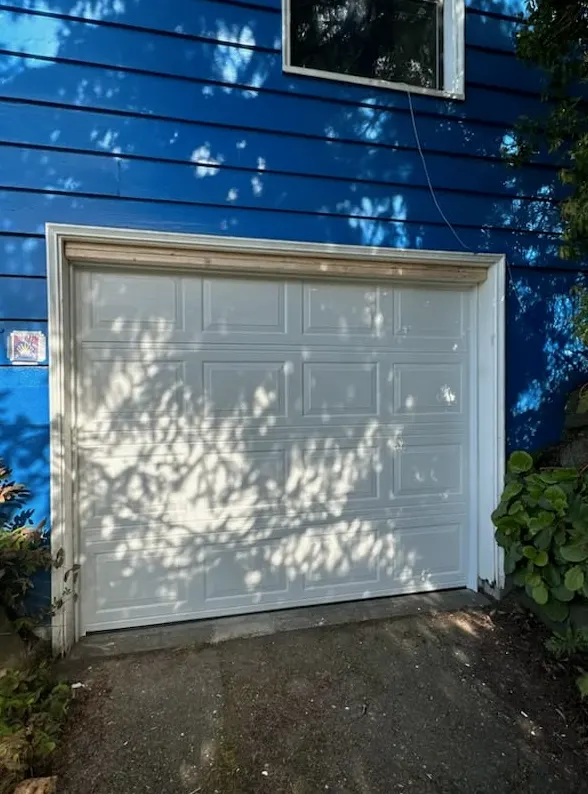
What the Technician Sees First
The call usually starts the same way: someone finished out the garage over a weekend, hung some foam board on the inside of the door panels, ran a window unit or mini-split for comfort, laid down rubber flooring, and a few months later the door either won't stay up, grinds on the way down, or the opener smells hot after every use. Nobody touched the door on purpose. But everything around it changed, and the door is usually the first thing to show it.
The Weight Question Nobody Thinks About
Garage door springs are tuned to the exact weight of the door as it left the factory. Glue rigid foam board or plywood to the inside of an uninsulated door to quiet it down or make the new room feel finished, and you've just added real weight to a system that was balanced for something lighter. The symptoms show up gradually: the door feels heavier when lifted by hand, it drifts down instead of holding its position, or the opener strains and starts making a higher-pitched motor noise on every cycle.
- Spouse A's argument: "It's just foam board, it's basically weightless."
- Spouse B's argument: "The door doesn't hold position like it used to, so something changed."
Both are half right. The foam itself is light, but it's rarely applied alone — most DIY insulation jobs add backer board, fasteners, and sometimes a vapor layer, and that combined weight is enough to throw off spring tension that was dialed in for the original panel weight.
Humidity, Condensation, and Rust Behind a Sealed Door
Converting the garage into usable space almost always means sealing it tighter — weatherstripping around the man door, foam in the gaps, sometimes a mini-split or window unit running to keep the room comfortable. That's good for the room and bad for the hardware on the other side of that insulation. In this part of Florida, warm humid air outside meeting a cooled, sealed interior creates condensation on cold metal surfaces overnight, especially on the inside face of the door and along the tracks and springs. Add in sweat and body heat if the room is a gym, and you've got a steady moisture source with nowhere to go once the space is sealed up.
Watch for:
- Surface rust forming on the torsion spring coils or the bottom roller brackets
- A faint musty smell near the door even though the rest of the garage/room is dry
- Tracks that feel gritty or slightly sticky instead of smooth
None of this is dramatic on day one, but rust on a spring under tension is not something to let ride through a full hurricane season.
Wind-Rating and the Door You Modify
If the conversion included cutting a vent, running a conduit or refrigerant line through the door itself, or adding a window for light, that's worth a second look. Garage doors in wind-load areas are engineered as a complete assembly — track spacing, panel reinforcement, and hardware are matched to resist pressure during storms. Cutting into the panel or adding weight unevenly can change how that assembly behaves under wind load, which matters a lot more here than in a climate that doesn't see hurricane season every year.
A quick gut check
- Anything added to the door face itself (insulation, decking, a window) changes either weight or structural integrity
- Anything added to the room around the door (AC, flooring, drywall) changes humidity and temperature swings against the door
- Either change on its own is manageable; both together without a tune-up is how doors fail early
The Opener Doesn't Know the Room Changed
Openers are sized to lift a specific weight range, with a little headroom built in. A heavier, insulated door asks more of the motor every single cycle. Short term, that shows up as slower travel speed or the opener straining near the top. Longer term, it's premature gear wear, a burnt-out motor, or the safety reversal sensors misreading resistance and refusing to close properly — which is a real problem if the garage is now a room people actually spend time in.
Settling the Argument: What to Check Before You Celebrate the New Space
- Lift test: disconnect the opener and lift the door by hand. It should move smoothly and hold position about halfway up. If it drops or flies up, the springs are no longer matched to the door's weight.
- Look at the hardware: check spring coils and roller brackets for surface rust, especially if the room now runs air conditioning or a dehumidifier.
- Check anything cut into the door: a window, vent, or line run through the panel should be reviewed against the door's wind rating, not just caulked and forgotten.
- Listen to the opener: a motor that sounds strained or runs slower than it used to is telling you the weight math changed.
When to Call Alachua Garage Door Pro
If the lift test feels off, or there's rust starting on the spring and track hardware, that's exactly what our Garage Door Maintenance & Tune-Up visit is built for — we'll check spring tension against the door's actual current weight, inspect hardware for corrosion, and catch wind-load concerns before they become a bigger repair. If the springs are already failing under the new weight, our Garage Door Spring Repair service gets the door properly rebalanced so the opener stops fighting it every day. Call Alachua Garage Door Pro and we'll settle the argument with a straight answer, not a guess.